
A player establishing a pre-season or in-season baseline
DTHA service · 05
Athletic Performance
Hockey skill needs the capacity to repeat quality actions throughout a shift, game and season.Testing is useful when the result changes training, recovery or monitoring. DTHA connects age-appropriate performance measures with the player’s schedule, on-ice demands and practical daily habits.
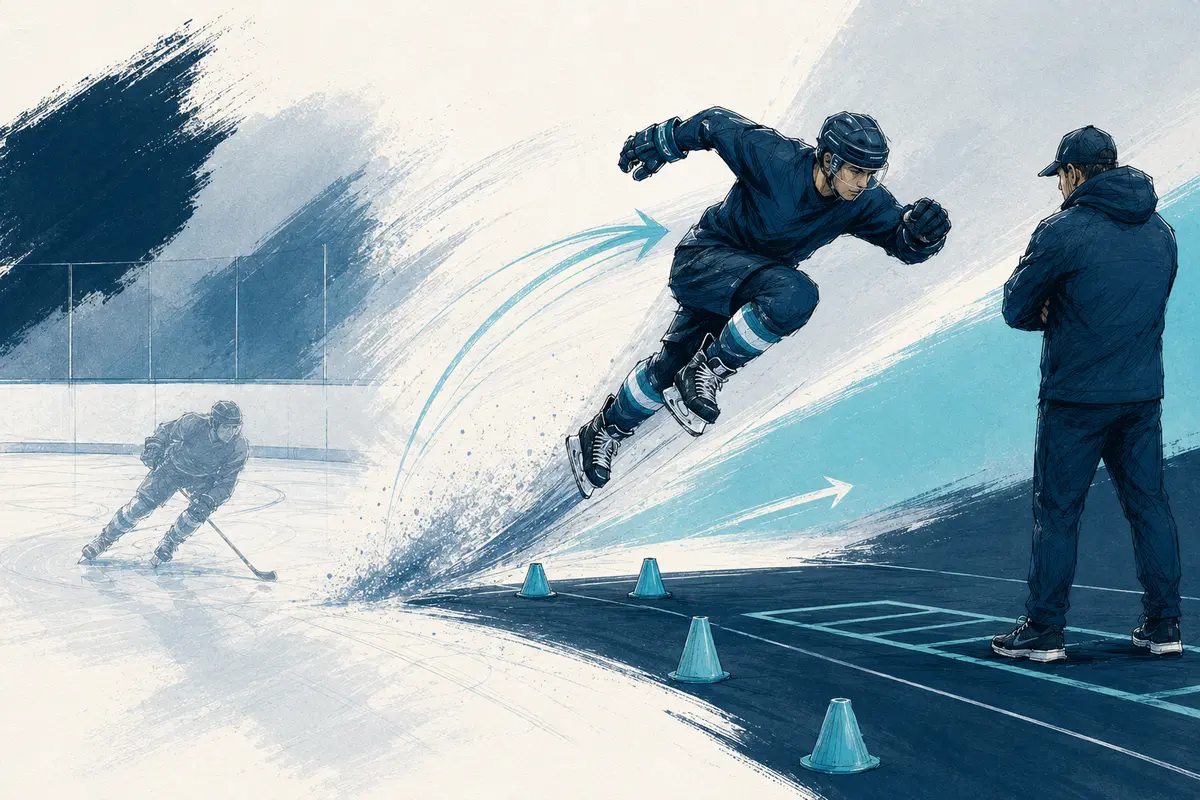
01 · FormatBaseline + practical guidance
02 · MeasuresCapacity, power, movement
03 · MethodMeasure → Interpret → Apply
Start with the real situation
This service earns its place when the problem is specific.
DTHA does not begin with a package. We begin with the player’s age, experience, current environment and the game situation that needs to change.
A player who struggles to repeat quality late in games
A family trying to organize training, school and recovery demands
A development plan that needs objective progress checkpoints
Choose the right layer
Testing and training serve different jobs.
A number is useful only when it changes a responsible decision. Switch between baseline assessment and the development block that follows it.
Question · measure · context · interpretation
Measure only what can improve the plan.
The baseline begins with a specific question and the player’s real workload. Measures are selected for age, maturation, training history and practical relevance, then interpreted alongside hockey, school, sleep and recovery demands.
Best used when
- A player establishing a pre-season or development baseline
- A plan that needs objective progress checkpoints
- A family trying to understand workload and recovery demands
What we developFour connected priorities
01
Movement
Control, coordination, mobility and positions relevant to safe quality work.
02
Speed
Acceleration mechanics and intent where measurement can guide training.
03
Power
Explosive qualities interpreted relative to age and training experience.
04
Capacity
Aerobic or repeat-effort information selected only when it answers the question.
How the session movesFrom context to transfer
- 01Question
Define what decision the result is expected to improve.
- 02Context
Review maturation, schedule, sleep, training age and current health.
- 03Measure
Use a clear, repeatable and age-appropriate protocol.
- 04Apply
Translate the result into a practical priority and follow-up point.
What responsible progress looks like
Change we can observe—not a promise we cannot control.
- The player understands what the measure means and does not mean
- Follow-up uses comparable conditions rather than chasing daily noise
- The result changes a real training or recovery decision
Explore this service by age
The service stays focused. The coaching changes.
Choose U6–U20. Situations, priorities, coaching design and observable progress update here without sending the family to another page.
U6 · Discover
Develop a mover, not a miniature lifter.
01
The goal is confidence, curiosity and broad movement—not a polished position or an early performance label.
3 focused cards for U6 · tap or click “Flip for details”
See the complete DTHA development standard Age is a starting point, not a diagnosis. Maturation, experience, current level, health, motivation and total weekly load can change the responsible coaching dose.
How DTHA works
A progression—not a collection of drills.
The exact content is service-specific, but every step must move the player from clearer information toward more independent performance.
- 01
Review the real workload
Games, practices, school, travel, sleep and other sports are considered together.
- 02
Choose the useful measure
Testing is selected for a specific question instead of using every available number.
- 03
Establish the baseline
The player completes an age-appropriate and clearly explained protocol.
- 04
Translate the result
Numbers are connected to hockey demands and practical actions the player can understand.
- 05
Schedule the next check
Progress is reviewed only after enough time and training have passed to make comparison meaningful.
Evidence behind the service
What leading hockey systems say—and how DTHA applies it.
These are direct links to the original organizations. DTHA uses their development principles independently; the references do not imply affiliation or endorsement.
01 · IIHF
Developmentally appropriate physical preparation
The IIHF Physical Development guide calls for programs matched to children, adolescents and young adults, including individualization, physical qualities and reduction of overuse risk.
DTHA applicationDTHA changes the exercise, dose and expectation by developmental stage instead of treating young players as smaller adults.
02 · USA Hockey
Fun, age-appropriate dryland training
USA Hockey’s dryland resources emphasize agility, balance, coordination, strength and skill through age-appropriate activities.
DTHA applicationYounger DTHA players build broad movement competence; structure and loading become more specific as readiness and training history increase.
03 · Hockey Canada
Off-ice work is broader than conditioning
Hockey Canada includes warm-up, balance, coordination, agility, plyometrics, core training, stickhandling, cool-down and nutrition in off-ice development.
DTHA applicationDTHA selects the physical quality that supports the current hockey problem and coordinates it with recovery and the weekly schedule.
What the player leaves with
Clear priorities that continue after the session.
The exact deliverable depends on the service and agreed scope. Every recommendation should be understandable, trainable and connected to the player’s real environment.
- A clear baseline and testing context
- Practical training or recovery priorities
- General age-appropriate performance education
- A recommendation for responsible follow-up
Start with context
Tell us what is happening in games.
Send the age, position, level, recent feedback, schedule and the problem you want to solve. DTHA will recommend the responsible first step.
Request an Assessment Call (942) 882-2701DTHA does not guarantee selection, placement, scholarships, performance outcomes or injury prevention. Recommendations are based on the information and observation available at the time.
01
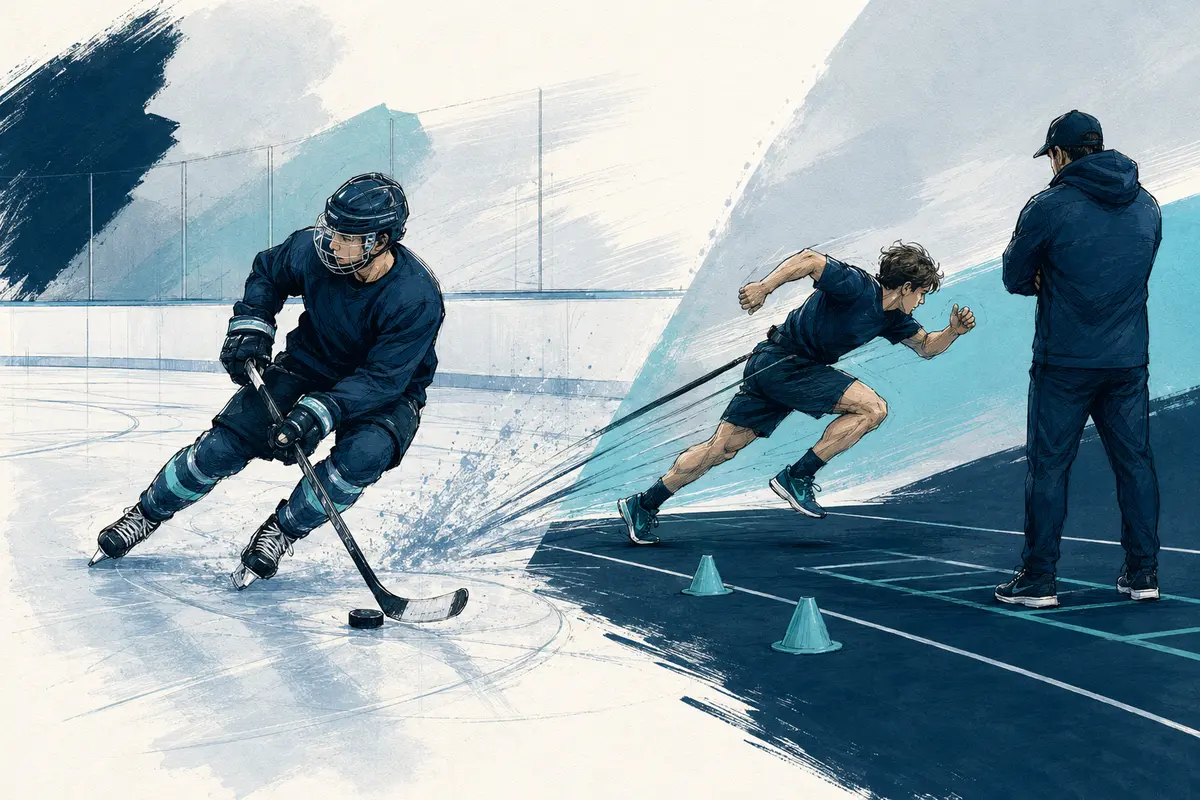 Individual Sessions
Correct the detail, add information, then make it survive the game.
02
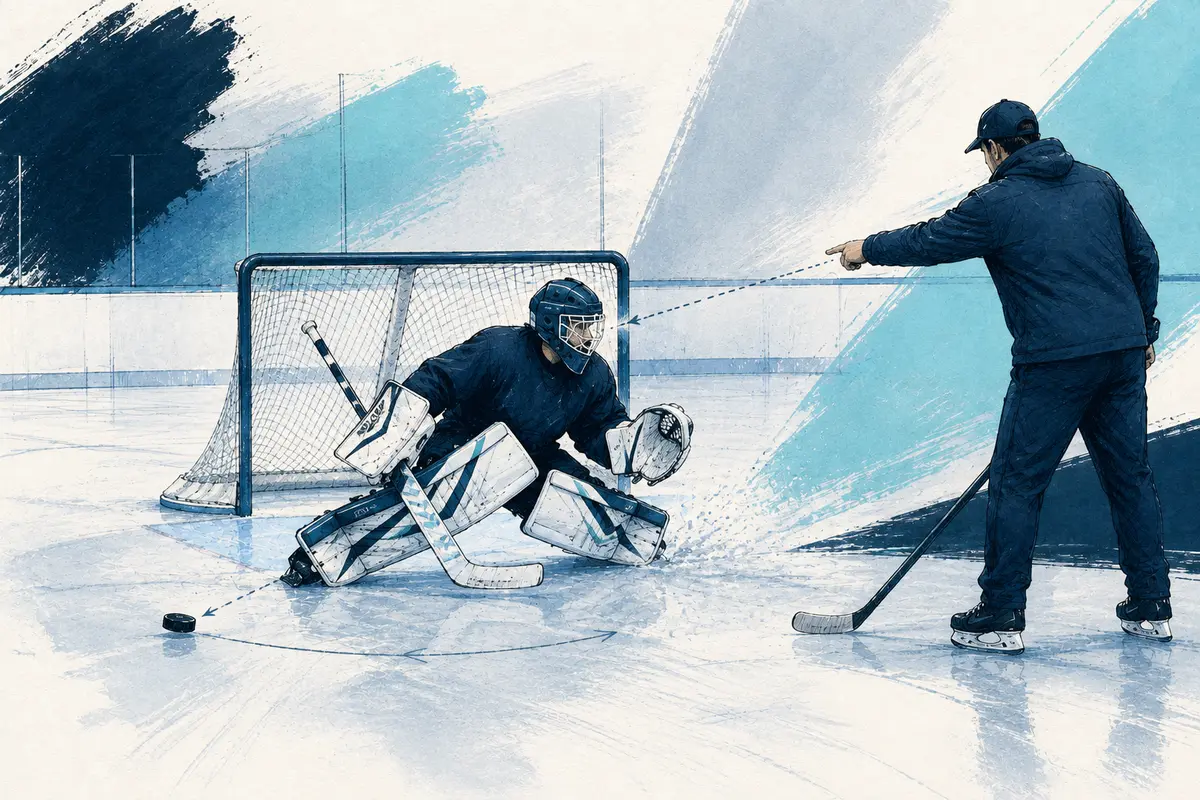 Goalie Coaching
Goalie training built around the puck, the threat and the next action.
03
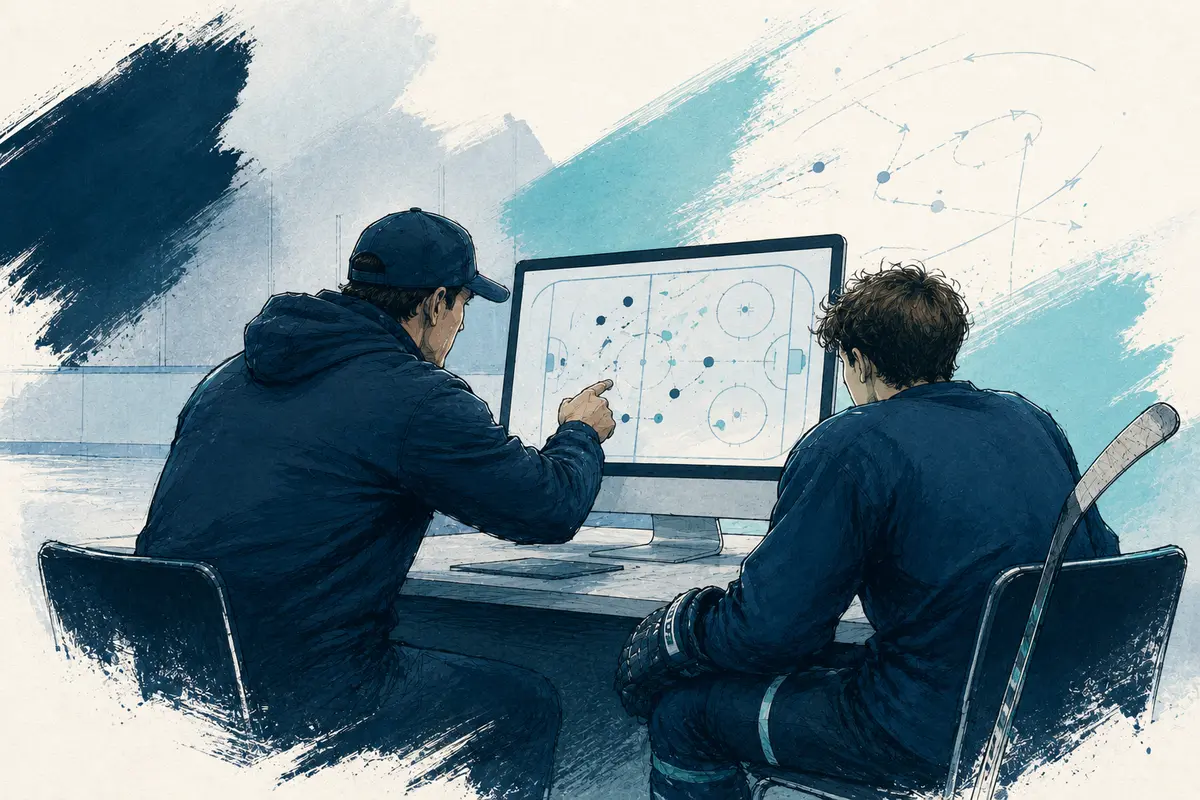 Video Coaching
Complete shifts become a practical development plan—not a highlight reel.
04
 Scouting + Evaluation
An honest profile of current performance, development priorities and realistic next steps.