
A goalie rebuilding stance, edges, depth or post habits
DTHA service · 02
Goalie Coaching
Goalie training built around the puck, the threat and the next action.A goalie does not need an endless volume of shots. A goalie needs clear movement routes, useful visual information, appropriate save choices and a repeatable plan after the first save. Each progression connects technique to a read.
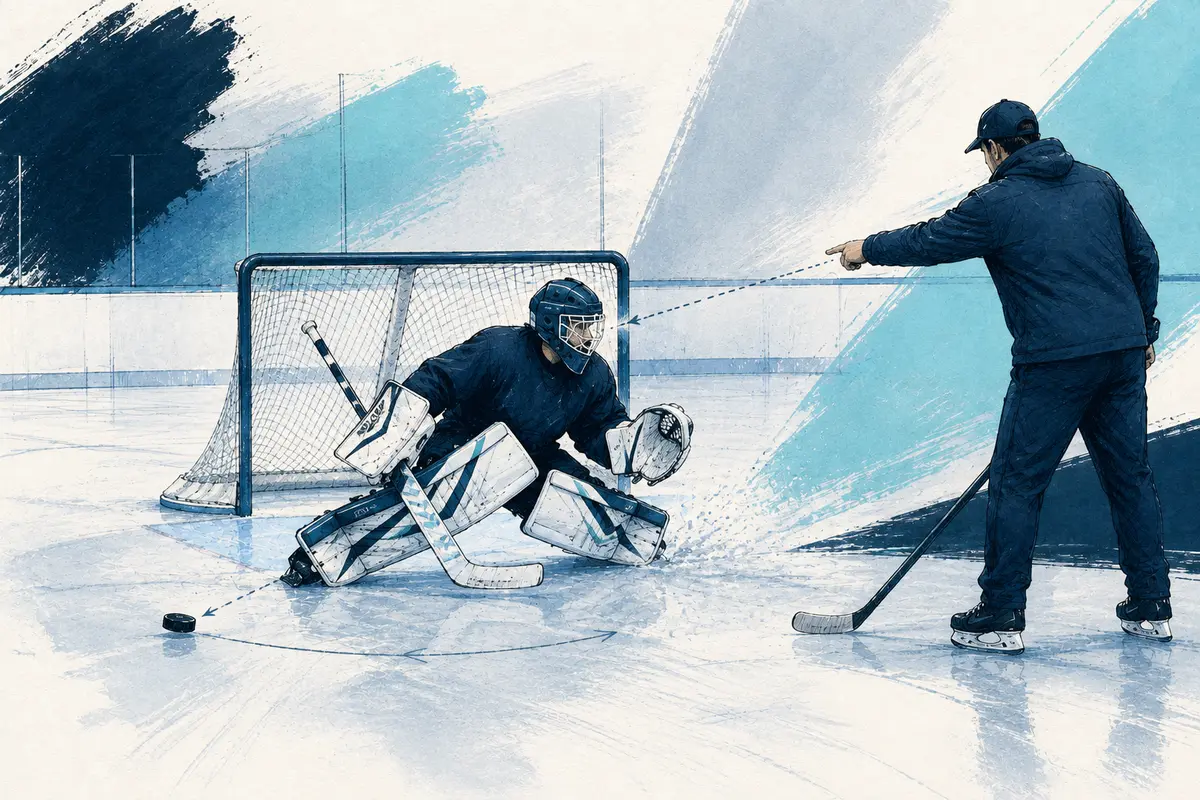
01 · FormatGoalie-specific coaching
02 · FocusMovement + reads
03 · MethodTrack → Set → Recover
Start with the real situation
This service earns its place when the problem is specific.
DTHA does not begin with a package. We begin with the player’s age, experience, current environment and the game situation that needs to change.
A goalie struggling to arrive set on lateral plays
A goalie who makes the first save but loses the second play
A goalie who needs calm, position-specific feedback
Choose the right layer
Technique and reads must develop together.
Goalies need reliable movement options, but the game decides which option is useful. Switch between the technical foundation and the read-and-recover layer of DTHA goalie coaching.
Stance · edges · routes · set position
Arrive balanced, square and available.
Technical work gives the goalie efficient routes and stable positions without prescribing the same answer to every shot. The priority is movement that leaves the goalie available for the release and the next play.
Best used when
- Inconsistent stance, depth, angle or set position
- Late or off-balance arrival on lateral movement
- Post integration and recovery routes needing structure
What we developFour connected priorities
01
Stance
Balanced readiness that keeps hands, edges and vision available.
02
Crease routes
Efficient shuffles, T-pushes, rotations and depth adjustments.
03
Set timing
Arriving with enough time to see, organize and respond to the release.
04
Post play
Options that match puck location, threat and time rather than one rigid habit.
How the session movesFrom context to transfer
- 01Position
Establish the stance, angle and depth for the situation.
- 02Route
Build the most efficient path into the next position.
- 03Release
Time the set and maintain visual attachment to the puck.
- 04Reset
Recover to an organized position instead of ending at the first save.
What responsible progress looks like
Change we can observe—not a promise we cannot control.
- The goalie arrives earlier without drifting past the angle
- Balance and visual attachment remain available through the save
- Recovery routes become shorter, calmer and more repeatable
Explore this service by age
The service stays focused. The coaching changes.
Choose U6–U20. Situations, priorities, coaching design and observable progress update here without sending the family to another page.
U6 · Discover
Explore the position—do not lock it in.
01
The goal is confidence, curiosity and broad movement—not a polished position or an early performance label.
3 focused cards for U6 · tap or click “Flip for details”
See the complete DTHA development standard Age is a starting point, not a diagnosis. Maturation, experience, current level, health, motivation and total weekly load can change the responsible coaching dose.
How DTHA works
A progression—not a collection of drills.
The exact content is service-specific, but every step must move the player from clearer information toward more independent performance.
- 01
Identify the situation
We start with the game situation or movement currently creating inconsistency.
- 02
Clean the route
The goalie builds an efficient movement, stance and set position for that problem.
- 03
Add the read
Release points, traffic, passing options and lateral threats make the movement responsive.
- 04
Continue the play
Rebounds and broken plays force the goalie to recover with information, not panic.
- 05
Review the cue
The goalie leaves with a simple visual or positional cue to recognize in games.
Evidence behind the service
What leading hockey systems say—and how DTHA applies it.
These are direct links to the original organizations. DTHA uses their development principles independently; the references do not imply affiliation or endorsement.
01 · Hockey Canada
A staged goaltending pathway
Hockey Canada organizes goaltending resources and practice plans by skill level, including movement, positioning, tracking and position-specific evaluation.
DTHA applicationDTHA scales technical detail and the amount of structure to the goalie’s development stage rather than coaching every age like an adult goalie.
02 · USA Hockey Goaltending
Foundation before advanced complexity
USA Hockey’s goalie plans move from stance, practice habits and lateral skating into recovery, tracking and more advanced game demands.
DTHA applicationEach DTHA block establishes a reliable foundation before adding layered threats, traffic and second-play decisions.
03 · USA Hockey Goaltending
Goalies are complete players
USA Hockey stresses coordinated communication between the team coach, goalie coach, parents and player, with goalie development integrated into game-like practice.
DTHA applicationDTHA connects specialized work to team practice, puck play, game responsibilities and the goalie’s wider development environment.
What the player leaves with
Clear priorities that continue after the session.
The exact deliverable depends on the service and agreed scope. Every recommendation should be understandable, trainable and connected to the player’s real environment.
- A defined visual or positional cue
- Specific corrections for movement and set position
- A plan for the second play, not only the first save
- A practical focus for team practices and games
Start with context
Tell us what is happening in games.
Send the age, position, level, recent feedback, schedule and the problem you want to solve. DTHA will recommend the responsible first step.
Request an Assessment Call (942) 882-2701DTHA does not guarantee selection, placement, scholarships, performance outcomes or injury prevention. Recommendations are based on the information and observation available at the time.
01
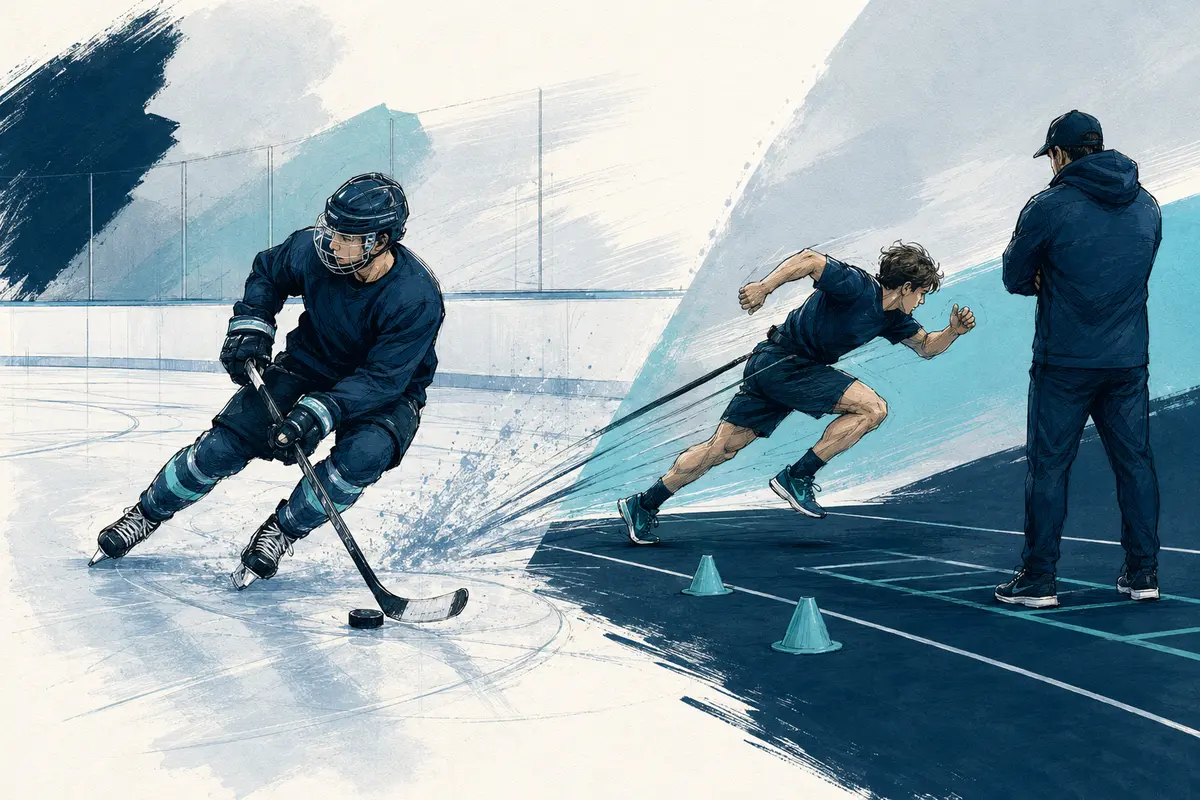 Individual Sessions
Correct the detail, add information, then make it survive the game.
03
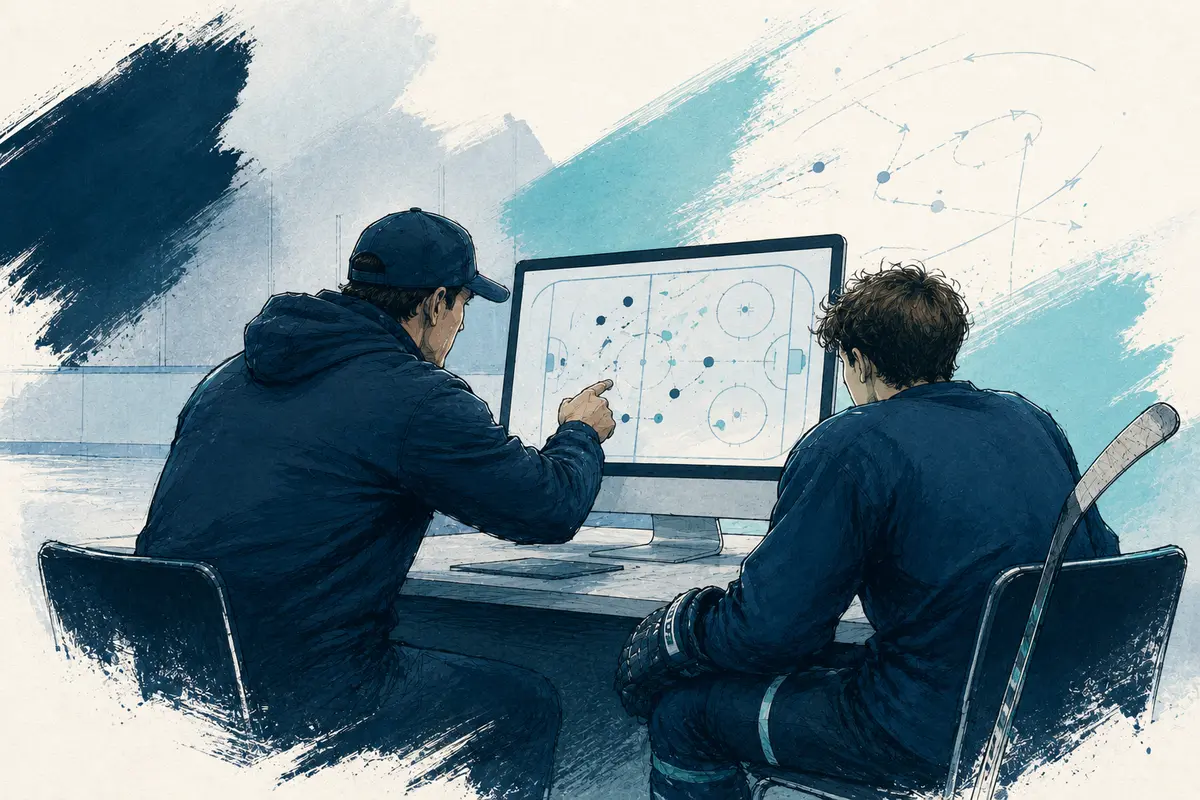 Video Coaching
Complete shifts become a practical development plan—not a highlight reel.
04
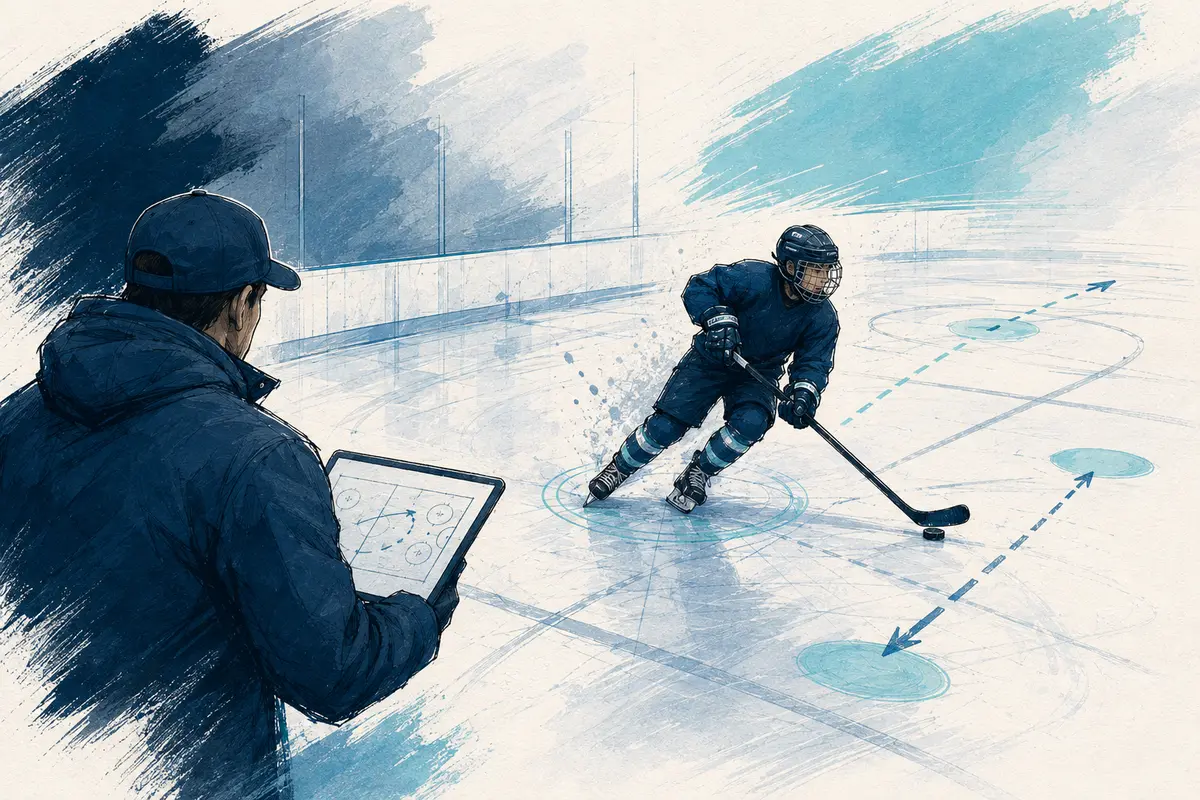 Scouting + Evaluation
An honest profile of current performance, development priorities and realistic next steps.
05
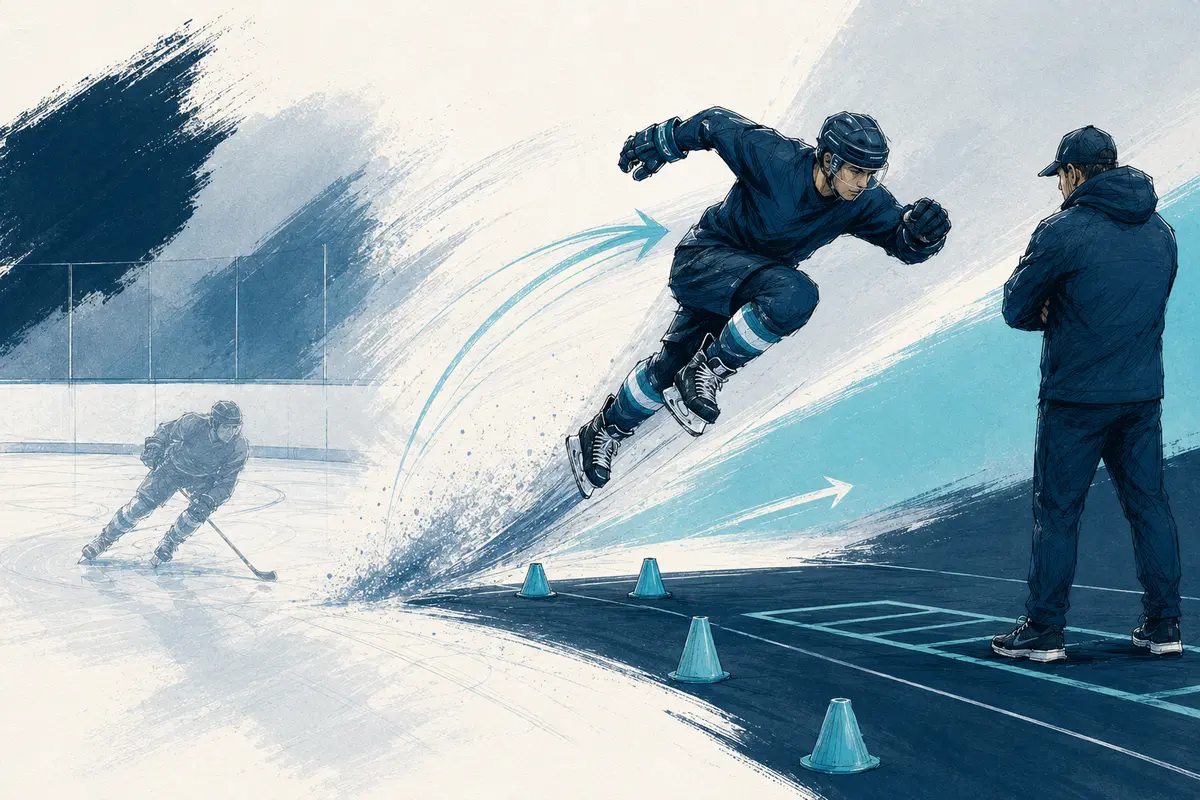 Athletic Performance
Hockey skill needs the capacity to repeat quality actions throughout a shift, game and season.