
A player who keeps repeating the same technical error
DTHA service · 01
Individual Sessions
Correct the detail, add information, then make it survive the game.Private coaching gives the player enough attention to identify the real constraint, understand the correction and repeat it with increasing speed, pressure and choice. The session is built around the player—not around a pre-written drill list.
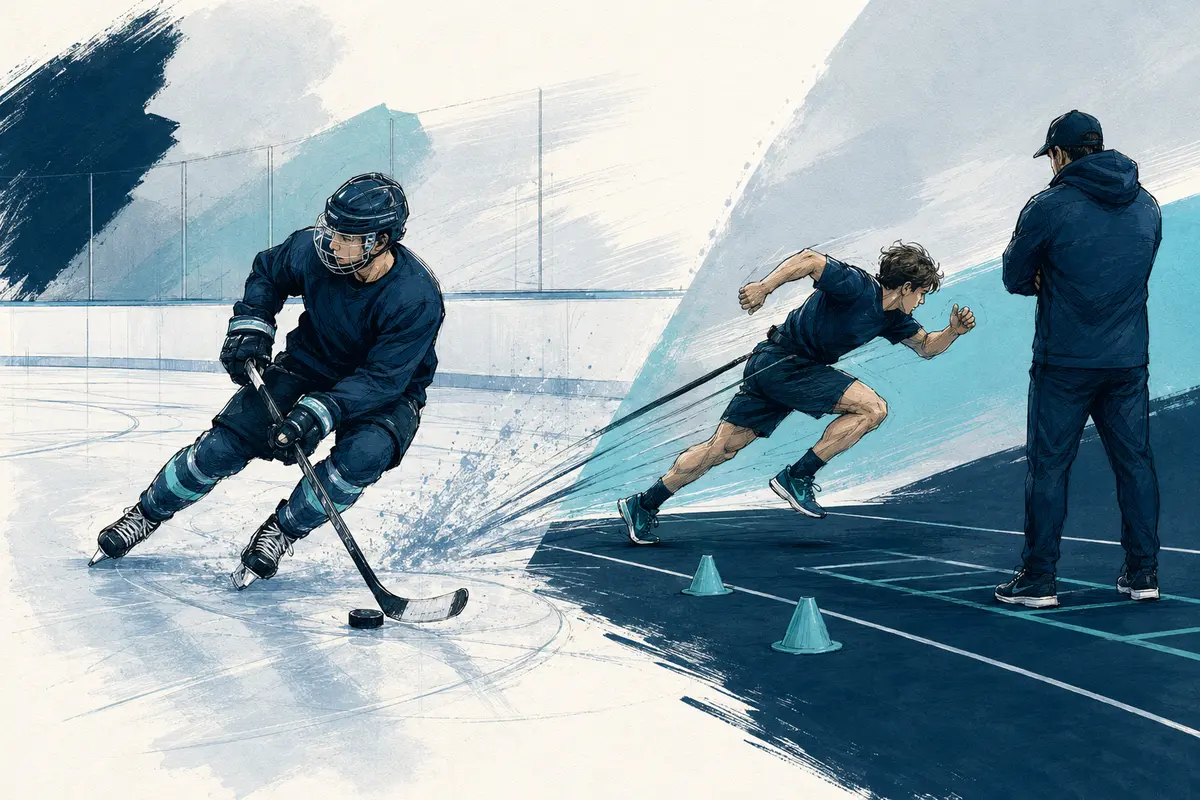
01 · Format1:1 on-ice coaching
02 · Starting pointPlayer assessment
03 · MethodAssess → Build → Transfer
Start with the real situation
This service earns its place when the problem is specific.
DTHA does not begin with a package. We begin with the player’s age, experience, current environment and the game situation that needs to change.
A player whose skill disappears when pace or pressure rises
A player preparing for a faster role, level or season
A family that wants specific priorities instead of general feedback
Choose the right layer
One development plan. Two training environments.
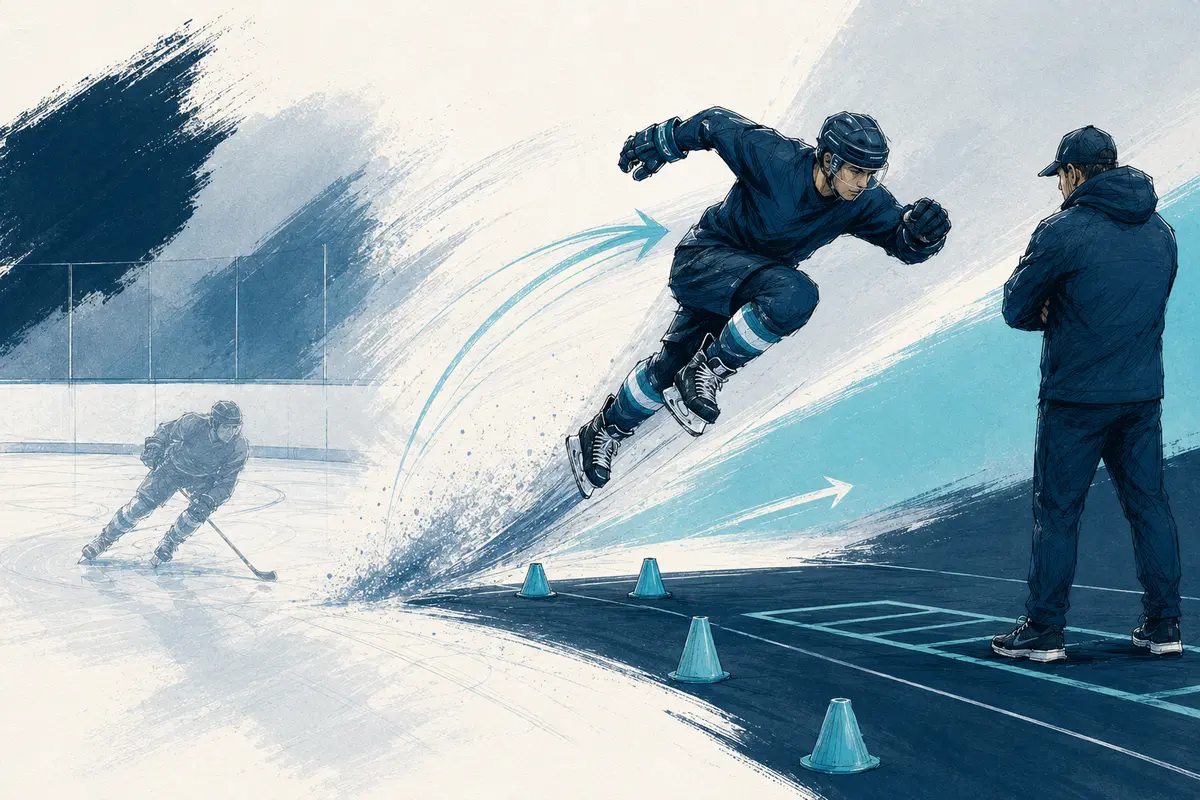
On-ice and off-ice work solve different parts of the same performance problem. Switch between them to see what belongs in each environment and how DTHA connects the two.
Technique · information · game transfer
Build the skill—then make the game ask for it.
The player receives enough individual attention to understand the correction, repeat it with quality and then apply it while reading pressure, space and options. The session is built around one meaningful constraint, not a catalogue of drills.
Best used when
- A technical detail that keeps repeating in games
- A skill that looks good in practice but disappears under pressure
- A player preparing for a faster role, level or season
What we developFour connected priorities
01
Skating
Edges, acceleration, deceleration, transitions and body position with a hockey purpose.
02
Puck skill
Handling, protection, passing and receiving while the feet and eyes stay active.
03
Scoring
Release, angle change, shot selection and finishing from realistic entries and passes.
04
Decisions
Earlier scanning, pressure recognition and more than one available option.
How the session movesFrom context to transfer
- 01Assess
Identify the exact situation and detail limiting performance.
- 02Build
Create a cleaner movement or puck solution at a controllable pace.
- 03Load
Add speed, timing, information, pressure and consequence.
- 04Transfer
Test whether the player recognizes and uses the solution in play.
What responsible progress looks like
Change we can observe—not a promise we cannot control.
- The correction appears without constant coach prompts
- The player can use the skill from more than one entry or angle
- Execution remains available when pace and pressure increase
Explore this service by age
The service stays focused. The coaching changes.
Choose U6–U20. Situations, priorities, coaching design and observable progress update here without sending the family to another page.
U6 · Discover
Confidence before correction.
01
The goal is confidence, curiosity and broad movement—not a polished position or an early performance label.
3 focused cards for U6 · tap or click “Flip for details”
See the complete DTHA development standard Age is a starting point, not a diagnosis. Maturation, experience, current level, health, motivation and total weekly load can change the responsible coaching dose.
How DTHA works
A progression—not a collection of drills.
The exact content is service-specific, but every step must move the player from clearer information toward more independent performance.
- 01
Find the constraint
We identify the one detail currently limiting the player’s performance or confidence.
- 02
Build a cleaner solution
The correction is explained, demonstrated and repeated at a pace that protects movement quality.
- 03
Add speed and information
Timing, visual cues, pressure and choice are introduced so the skill cannot become a memorized route.
- 04
Test game transfer
The player must recognize when and why to use the skill in a competitive hockey situation.
- 05
Set the next priority
The session closes with practical cues and the next step for team practice, games or another training block.
Evidence behind the service
What leading hockey systems say—and how DTHA applies it.
These are direct links to the original organizations. DTHA uses their development principles independently; the references do not imply affiliation or endorsement.
01 · Hockey Canada
Age-appropriate skill and small-area work
Hockey Canada reports that scaled spaces and smaller groups increase involvement, puck touches, passes, shots and game-like decision pressure.
DTHA applicationDTHA moves from a clean technical correction into smaller, information-rich situations instead of leaving the skill in an isolated route.
02 · USA Hockey
Age-specific practice design
USA Hockey publishes age-specific practice plans and skill progressions so complexity, repetitions and coaching demands match the player’s stage.
DTHA applicationThe same service changes substantially between U6, U12 and U18; language, pressure, session density and expected independence are not copied between ages.
03 · Hockey Canada
Off-ice development supports the complete player
Hockey Canada’s off-ice resources include balance, coordination, agility, quickness, core work, plyometrics, warm-up and recovery education.
DTHA applicationDTHA uses off-ice training to support a defined hockey need and the whole weekly load—not as random conditioning punishment.
What the player leaves with
Clear priorities that continue after the session.
The exact deliverable depends on the service and agreed scope. Every recommendation should be understandable, trainable and connected to the player’s real environment.
- A clearly defined development priority
- Two or three player-friendly coaching cues
- An explanation of where the skill appears in games
- A recommendation for the next training progression
Start with context
Tell us what is happening in games.
Send the age, position, level, recent feedback, schedule and the problem you want to solve. DTHA will recommend the responsible first step.
Request an Assessment Call (942) 882-2701DTHA does not guarantee selection, placement, scholarships, performance outcomes or injury prevention. Recommendations are based on the information and observation available at the time.
02
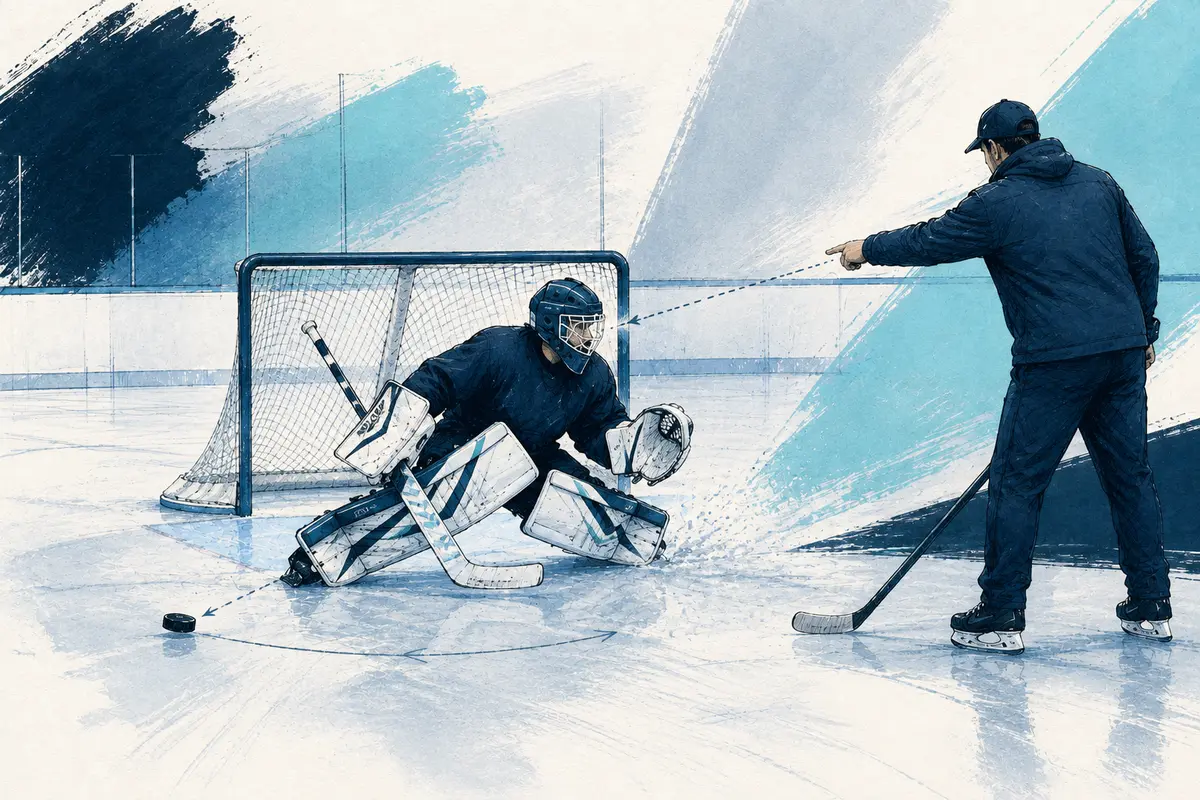 Goalie Coaching
Goalie training built around the puck, the threat and the next action.
03
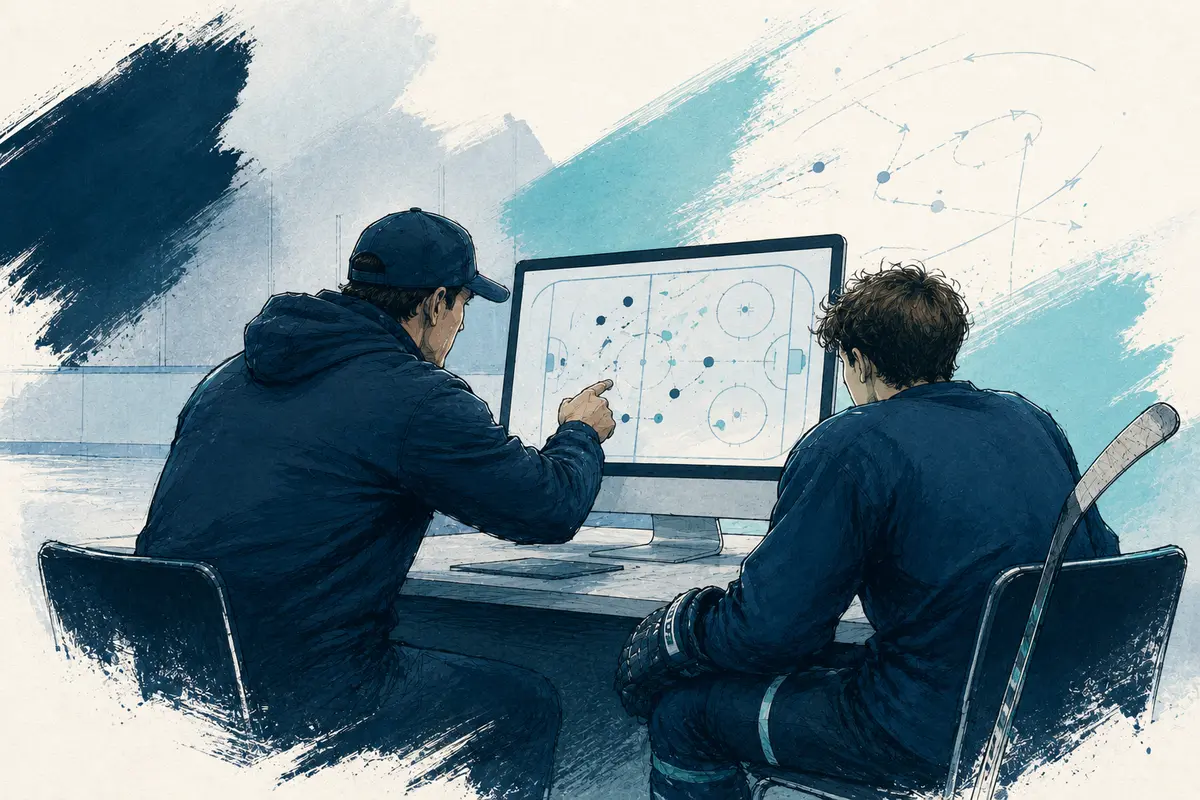 Video Coaching
Complete shifts become a practical development plan—not a highlight reel.
04
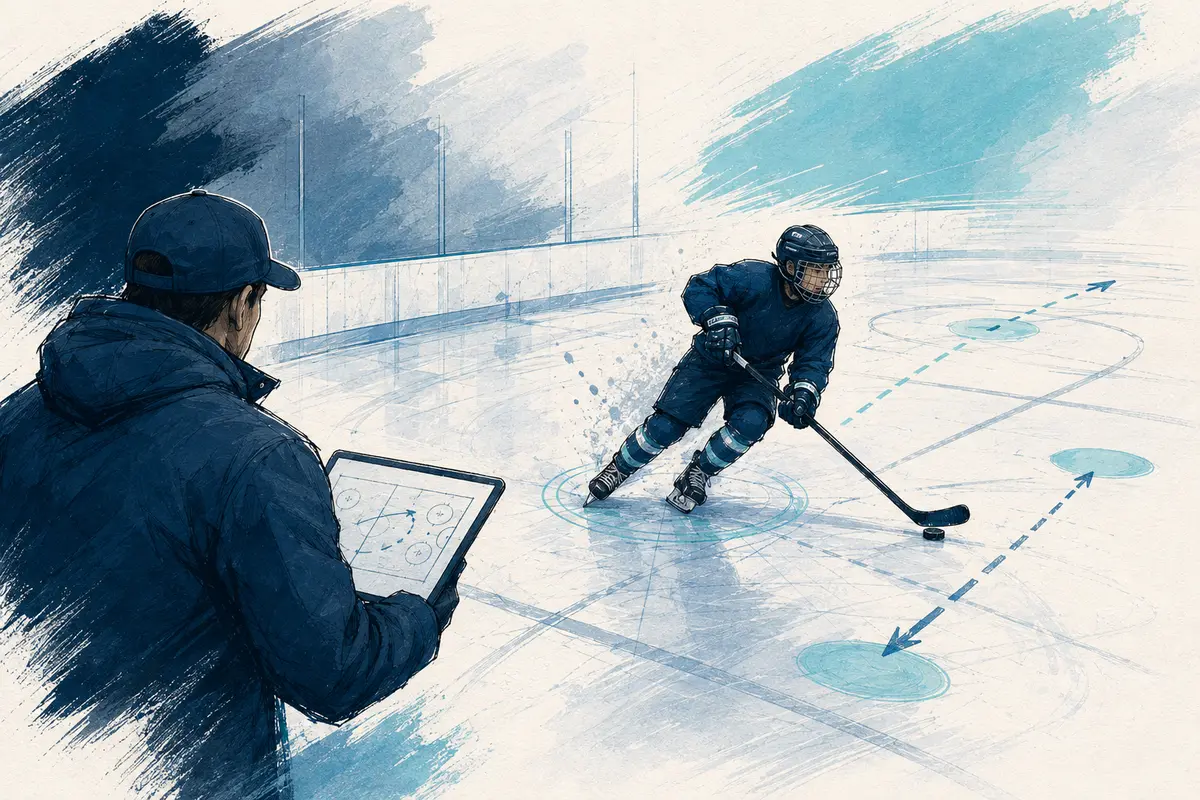 Scouting + Evaluation
An honest profile of current performance, development priorities and realistic next steps.
05
 Athletic Performance
Hockey skill needs the capacity to repeat quality actions throughout a shift, game and season.